From Idea to Living Room: What End-to-End Engineering Really Takes
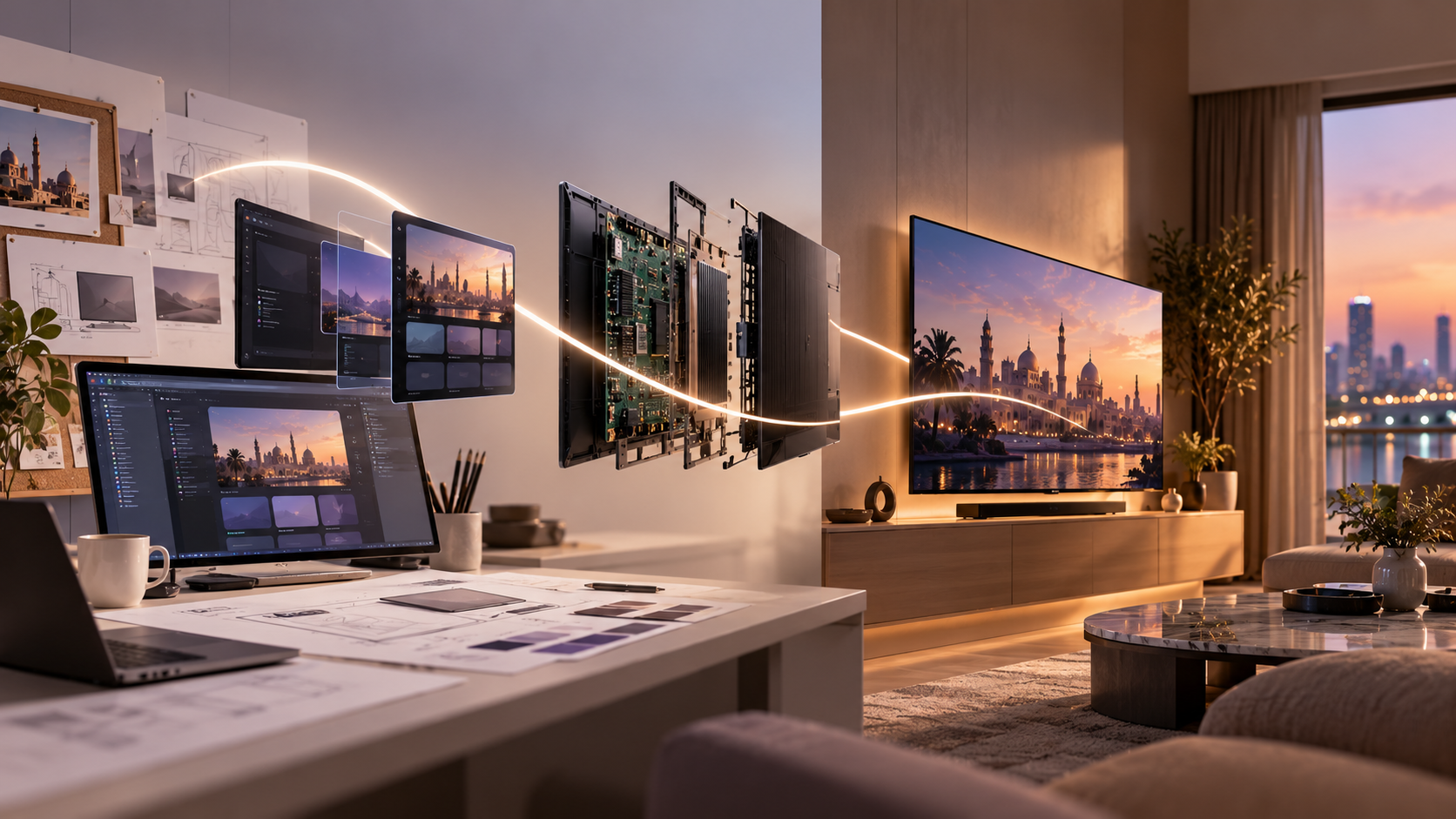
Behind a simple connected experience is a carefully coordinated journey through design, software, hardware and validation.
A finished product hides a complex journey
The most intuitive connected experiences rarely reveal how much coordination went into creating them. A television turns on, an interface responds, content loads and the device behaves as expected. Behind those simple moments are design decisions, software architecture, physical components, testing plans and production considerations.
Treating those disciplines as separate handovers can create gaps. A beautiful interface may exceed device constraints. A hardware decision may affect software compatibility. A prototype that works in a laboratory may still require additional validation before production. End-to-end thinking makes those dependencies visible early.
An industry example of modular thinking
RDK describes its video platform as a modular, portable, customisable open-source solution for video devices. Its documented architecture separates vendor, core and application layers. This is a useful example of why integration and clear interfaces matter in connected-product development; it does not establish that every OORO project uses RDK.
Three disciplines, one coordinated approach
OORO Technology Services is organised around digital experience, software engineering and hardware engineering. Digital experience shapes the journeys across TV, web and mobile. Software engineering addresses applications, connected platforms, backend services, cloud, remote updates, testing and operations. Hardware engineering brings expertise in evaluation platforms, application boards, design review, tooling and factory support.
The value is not that every project needs every service. It is that teams can consider the relevant disciplines together and define a scope suited to the product. A connected-TV application has different needs from a new hardware platform, but both benefit from clarity about integration and validation.
Quality needs a defined model
ISO/IEC 25010:2023 defines a product-quality model for ICT and software products with nine quality characteristics. ISO states that the model can support requirements, design objectives, testing objectives, acceptance criteria and evaluation across a product lifecycle. This is a standards-based reason to discuss quality before a device reaches the factory floor, rather than treating it as a final inspection.
A lifecycle built around learning
The capability catalogue describes a product experience lifecycle of Discover, Define, Design, Prototype, Validate, Handoff and Optimise. Each stage answers a different question. What problem matters? What should the product do? How should it work? Can the idea be demonstrated? Does it perform as intended? Is the next team ready? What should improve after delivery?
This is not simply a sequence of approvals. It is a way to make learning useful. Early prototypes can expose assumptions before they become expensive commitments. Validation can test the experience as well as its underlying technology. A thoughtful handoff protects the design intent when implementation continues.
What our catalogue actually covers
The OORO capability catalogue lays out Discover, Define, Design, Prototype, Validate, Handoff and Optimise for the product experience. Its software portfolio includes TV apps, OTT/backend, platform integration, analytics, OTA/device management, testing and operations; its hardware portfolio covers application boards, evaluation platforms, QC and factory support. These are catalogue capabilities, not independent proof that every offering has been delivered for a named client.
Production readiness deserves its own attention
Hardware work introduces another layer of practical decisions: component availability, schematic and layout design, bill of materials, power integration, software compatibility and engineering validation. Factory support and testing tools can also matter when a solution moves toward assembly.
The OORO catalogue documents these capabilities, including automated PCB testing and engineering support for manufacturing workflows. Specific project responsibilities and certification-related deliverables should always be defined and verified for each engagement.
The real result is confidence
An end-to-end process is not about making complexity disappear by promising everything. It is about making complexity manageable through shared visibility, clear ownership and evidence-based decisions. When experience design, software and hardware are coordinated, the final product has a stronger foundation for the moments people actually care about.