Blog
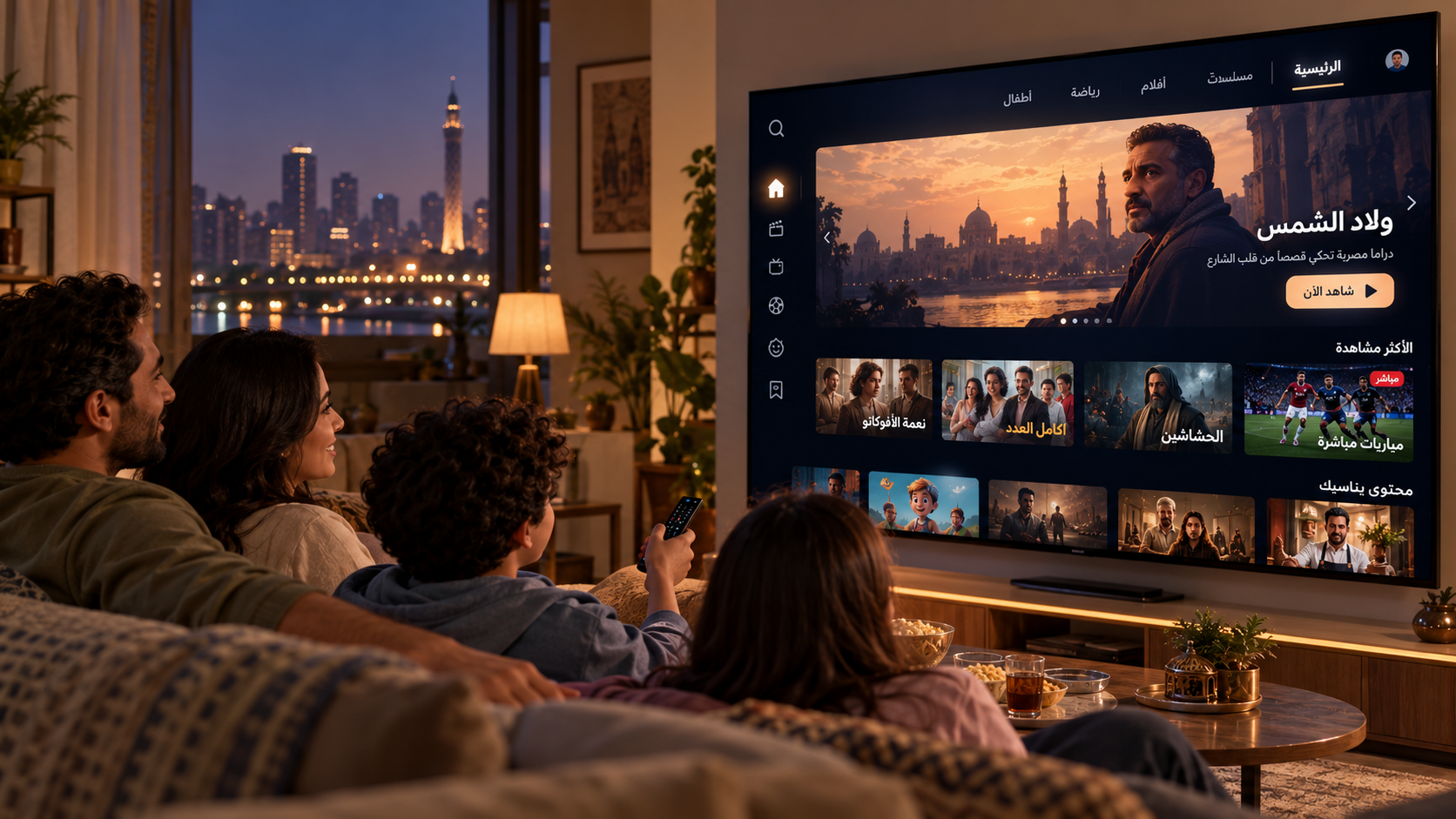
The Future of Smart TV Should Feel Like Home
What changes when connected entertainment starts with the people, languages and cultures it is designed to serve?
The screen is global. The experience is personal.
A television can open a window onto the world in seconds. A story from another country, a live event, a familiar programme and a new discovery can all sit side by side. Yet the way people find, navigate and enjoy those experiences is deeply personal. It is shaped by language, routines, cultural context and the people sharing the room.
That is why the future of connected entertainment cannot be defined only by bigger catalogues or more sophisticated technology. It must also be defined by how naturally the experience fits into everyday life. An interface can be powerful and still feel distant. It can offer endless choice and still make discovery unnecessarily difficult.
The scale of the change
Nielsen's The Gauge reported that streaming represented 44.8% of all television use in the United States in May 2025, compared with 44.2% for broadcast and cable combined. It was the first month streaming exceeded those two categories together in that measurement. This is a US viewing measure, not a claim about Arab households. It does, however, illustrate why the television interface has become a critical place for navigating different types of entertainment. [1]
What Arabic-first really means
Arabic-first is not simply a translation applied after a product has been designed. It is a starting point. It means considering right-to-left navigation, content organisation, typography, the language of instructions and the way audiences recognise what matters to them from the beginning.
It also means resisting the idea that all households are the same. Families differ in age, taste and habits. A thoughtful platform creates room for those differences without losing its sense of clarity. Cultural relevance is strongest when it is expressed through useful details, not decoration.
A regional reason to design with care
In its 2025 regional report, GSMA estimated that 308 million people in the Middle East and North Africa used mobile internet in 2024. Digital experiences now cross devices and contexts, but connectivity alone does not guarantee relevance. The next question is how well products work for the people who use them. [2]
A family experience, not just an individual screen
Television remains one of the few digital experiences people regularly share. One person may be searching for a favourite show while another wants to explore something new. The remote passes from hand to hand. A great interface respects those small moments.
Designing with family in mind means valuing legibility, intuitive navigation, meaningful choice and confidence in the experience. It also means recognising that trust and privacy are foundational design responsibilities, not optional extras to add at the end.
Why Arabic cannot be an afterthought
The World Wide Web Consortium's Arabic and Persian Layout Requirements note, dated October 2025, documents right-to-left page structure and the special handling needed for mixed-direction text and numbers. These are structural considerations, not cosmetic ones.
From familiar to possible
At OORO, our Arabic-first perspective sits alongside a wider connected-technology ambition. OORO OS represents our platform direction for the television experience, while OORO Technology Services brings digital experience, software and hardware engineering together for connected products.
These are complementary expressions of one belief: innovation becomes more meaningful when it understands the people it serves. The opportunity is not to make technology feel smaller. It is to make its possibilities feel closer.
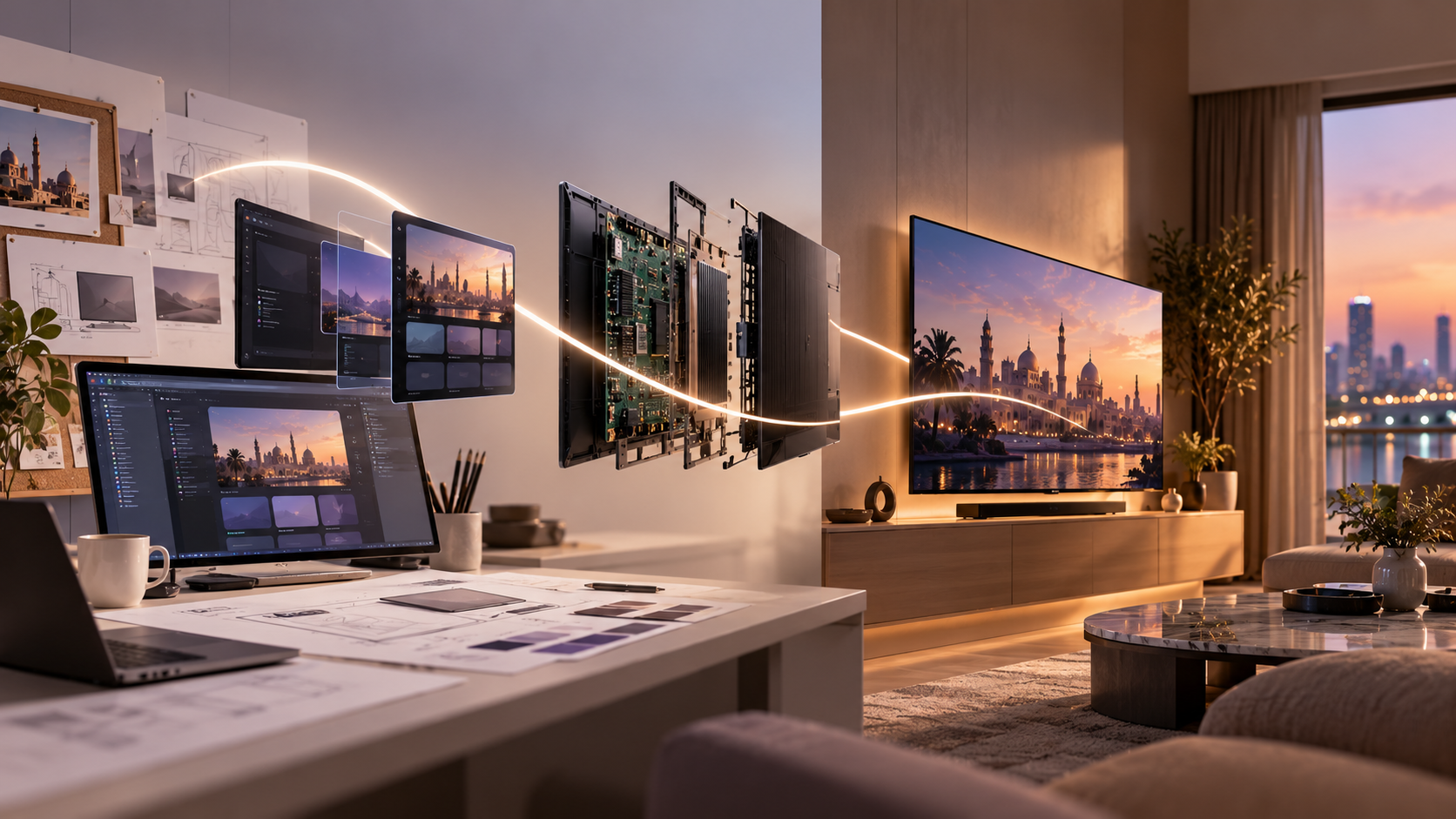
From Idea to Living Room: What End-to-End Engineering Really Takes
Behind a simple connected experience is a carefully coordinated journey through design, software, hardware and validation.
A finished product hides a complex journey
The most intuitive connected experiences rarely reveal how much coordination went into creating them. A television turns on, an interface responds, content loads and the device behaves as expected. Behind those simple moments are design decisions, software architecture, physical components, testing plans and production considerations.
Treating those disciplines as separate handovers can create gaps. A beautiful interface may exceed device constraints. A hardware decision may affect software compatibility. A prototype that works in a laboratory may still require additional validation before production. End-to-end thinking makes those dependencies visible early.
An industry example of modular thinking
RDK describes its video platform as a modular, portable, customisable open-source solution for video devices. Its documented architecture separates vendor, core and application layers. This is a useful example of why integration and clear interfaces matter in connected-product development; it does not establish that every OORO project uses RDK.
Three disciplines, one coordinated approach
OORO Technology Services is organised around digital experience, software engineering and hardware engineering. Digital experience shapes the journeys across TV, web and mobile. Software engineering addresses applications, connected platforms, backend services, cloud, remote updates, testing and operations. Hardware engineering brings expertise in evaluation platforms, application boards, design review, tooling and factory support.
The value is not that every project needs every service. It is that teams can consider the relevant disciplines together and define a scope suited to the product. A connected-TV application has different needs from a new hardware platform, but both benefit from clarity about integration and validation.
Quality needs a defined model
ISO/IEC 25010:2023 defines a product-quality model for ICT and software products with nine quality characteristics. ISO states that the model can support requirements, design objectives, testing objectives, acceptance criteria and evaluation across a product lifecycle. This is a standards-based reason to discuss quality before a device reaches the factory floor, rather than treating it as a final inspection.
A lifecycle built around learning
The capability catalogue describes a product experience lifecycle of Discover, Define, Design, Prototype, Validate, Handoff and Optimise. Each stage answers a different question. What problem matters? What should the product do? How should it work? Can the idea be demonstrated? Does it perform as intended? Is the next team ready? What should improve after delivery?
This is not simply a sequence of approvals. It is a way to make learning useful. Early prototypes can expose assumptions before they become expensive commitments. Validation can test the experience as well as its underlying technology. A thoughtful handoff protects the design intent when implementation continues.
What our catalogue actually covers
The OORO capability catalogue lays out Discover, Define, Design, Prototype, Validate, Handoff and Optimise for the product experience. Its software portfolio includes TV apps, OTT/backend, platform integration, analytics, OTA/device management, testing and operations; its hardware portfolio covers application boards, evaluation platforms, QC and factory support. These are catalogue capabilities, not independent proof that every offering has been delivered for a named client.
Production readiness deserves its own attention
Hardware work introduces another layer of practical decisions: component availability, schematic and layout design, bill of materials, power integration, software compatibility and engineering validation. Factory support and testing tools can also matter when a solution moves toward assembly.
The OORO catalogue documents these capabilities, including automated PCB testing and engineering support for manufacturing workflows. Specific project responsibilities and certification-related deliverables should always be defined and verified for each engagement.
The real result is confidence
An end-to-end process is not about making complexity disappear by promising everything. It is about making complexity manageable through shared visibility, clear ownership and evidence-based decisions. When experience design, software and hardware are coordinated, the final product has a stronger foundation for the moments people actually care about.
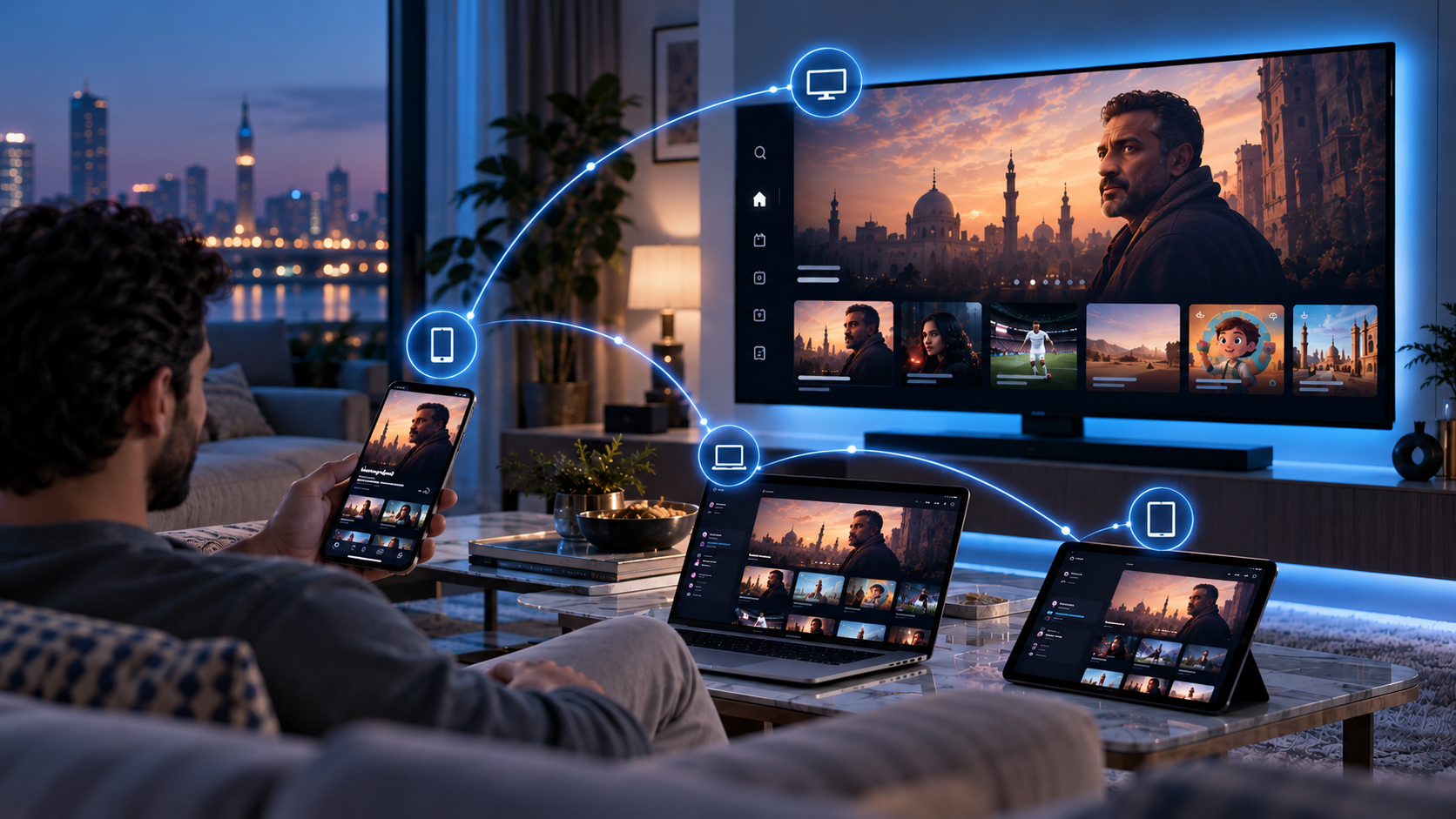
One Experience, Many Screens: Why Connected Design Matters
A journey can begin on a television and continue on a phone. The best connected experiences make that feel natural.
People do not think in platforms
A viewer may first notice something on the television, look for more information on a phone and return to the big screen later. A business customer may discover a service on the web and then interact with it through a connected device. These are not separate relationships in the person's mind. They are parts of one experience.
Products become frustrating when each screen behaves as if it exists alone. Familiar controls move unexpectedly, terminology changes and users have to learn the same task again. Connected experience design begins by looking at the complete journey rather than a collection of isolated interfaces.
Connected audiences are already here
GSMA's Mobile Economy MENA 2025 reports 308 million mobile-internet users in the region in 2024. That figure describes mobile connectivity, not the number of people using companion TV applications. Still, it provides a concrete backdrop for considering how a television experience and a phone experience can work together.
Consistency is more than matching colours
A shared visual identity matters, but a connected design language goes further. Navigation patterns, interaction principles, component behaviour, information architecture and feedback states should make sense together. A television requires distance-friendly legibility and remote-control navigation. A phone depends on touch and a different viewing context. Consistency means preserving the logic while adapting the interaction.
That balance is especially important for companion experiences. The OORO Companion App, for example, is positioned as a mobile remote control and TV device manager—not an entertainment app catalogue. The relationship between the phone and television should therefore be easy to understand, with supported controls and management functions represented accurately.
A recognised design baseline
The W3C's WCAG 2.2 guidance applies to web content across device types, including desktop and mobile. It addresses issues such as accessibility for people with visual, hearing, movement and cognitive disabilities. For connected design teams, it is a reminder that consistency should be accompanied by legibility, operability and inclusive interaction—not merely shared colours.
Design and engineering need the same conversation
A promising prototype is only the beginning. Real products depend on practical specifications, implementation reviews, interaction guidelines and quality validation. Designers need to understand the opportunities and constraints of the target platform. Engineers need clarity about intended behaviour and the details that make an experience coherent.
OORO's capability catalogue describes digital experience work across TV OS and smart TV interfaces, responsive web, iOS and Android, companion experiences, shared design systems and developer-ready handoff. Bringing these capabilities into one process helps reduce the distance between a design intention and the experience a person eventually uses.
Why the handoff matters
RDK's public documentation describes a modular video architecture with vendor, core and application layers, allowing components to be developed and tested with clearer boundaries. OORO's own catalogue describes developer-ready UI specifications, implementation reviews and shared components. These are different kinds of evidence: RDK documents an industry architecture; the OORO catalogue documents our proposed service scope.
Build the journey before polishing the screens
A useful starting point is to map the moments that matter: discovery, first interaction, routine use, returning to a task and getting help. Then identify which device is best suited to each moment. Only after that should teams settle the detailed screen-by-screen behaviour.
When this approach works, the technology does not call attention to the boundaries between devices. People simply feel that the experience understands what they are trying to do.
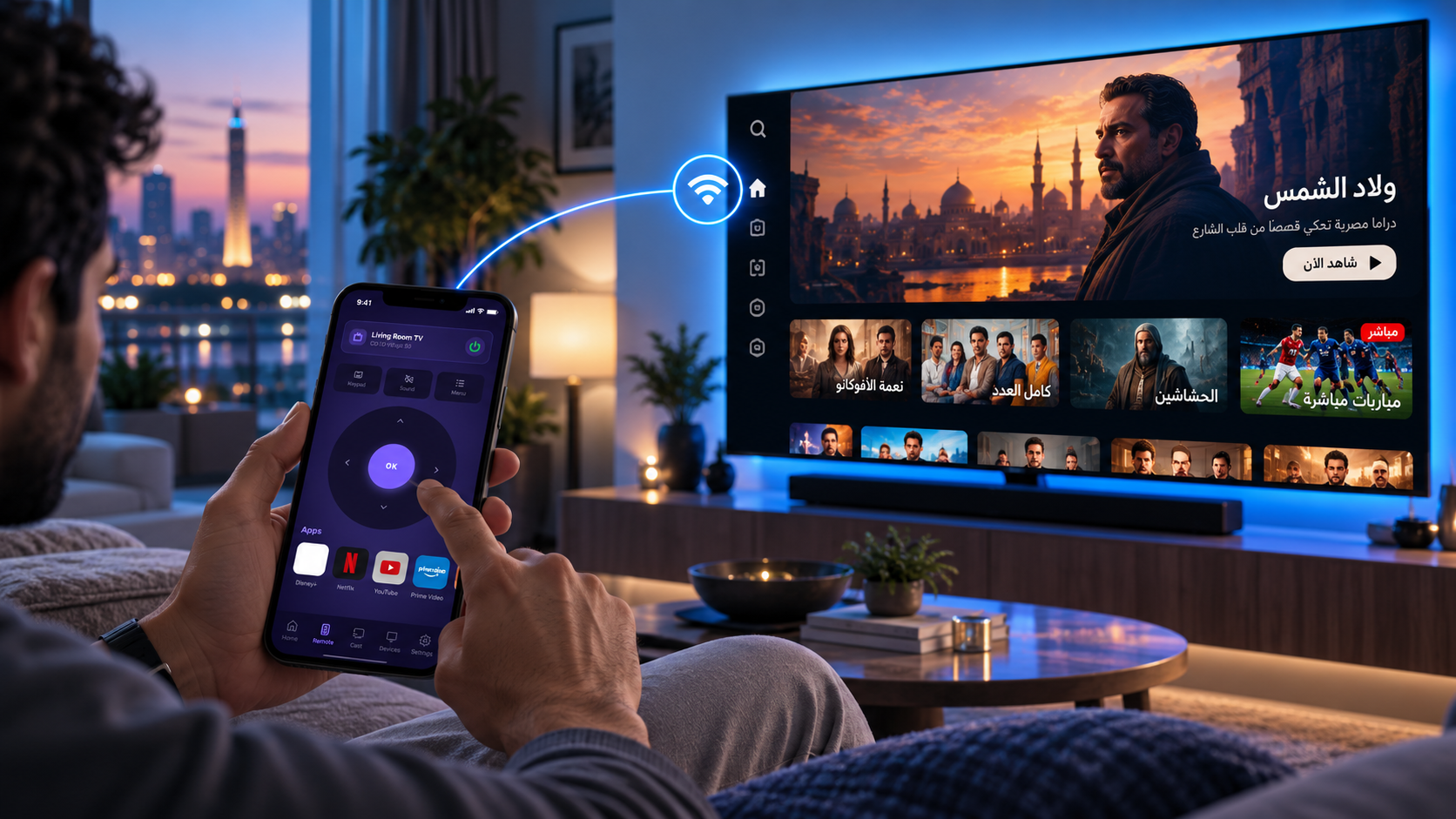
Your TV. In Your Hands: The Role of a Mobile Companion App
A smartphone can make everyday television interaction more convenient when the companion experience has a clear purpose.
The remote is part of everyday life
For many households, the television remote is one of the most frequently shared devices in the room. It is picked up, passed around and occasionally misplaced. A mobile companion experience offers another familiar way to interact with a television: through a device people already use throughout the day.
The important question is not how many functions an app can display. It is whether the app helps people complete useful tasks with less friction. A good companion has a clear role and makes the relationship between phone and television easy to understand.
Mobile is an established part of the regional digital environment
GSMA estimates 308 million mobile-internet users in MENA in 2024. This does not measure how many households want to control a TV by phone; it does show why mobile can be a sensible interface to consider when designing connected-device experiences.
Control and management, with a clear purpose
The OORO Companion App is conceived as a mobile remote control and device manager for compatible OORO-enabled televisions. That distinction matters. It should not be described as a streaming marketplace, an entertainment app store or a separate content platform.
The remote-control experience and device-management experience serve related but different needs. One supports everyday interaction with the TV; the other provides access to supported management functions. The exact controls, pairing process, device compatibility and platform availability should be described only when confirmed for the released app.
A real-world reference for the interaction
Google's official Android TV Help explains how a phone or tablet can serve as a virtual remote through the Google TV app. Its setup guidance involves selecting a television, entering a code displayed on the screen and pairing the devices; its troubleshooting also discusses shared Wi-Fi connectivity. These are Google's product instructions, not a description or promise of OORO's pairing flow.
Design for the moment, not the feature list
A remote-control interface needs obvious interaction priorities. People should be able to recognise what to do without studying the screen. A device-management area should be organised around understandable tasks and clear feedback. The visual relationship between the mobile app and TV also matters: people should know which television they are interacting with and what happened after an action.
The wider lesson applies to all connected products. Cross-device design is strongest when it follows real use rather than forcing every capability onto every screen. A phone and a television have different strengths; a companion experience should respect both.
Where OORO is different in this article
The supplied OORO website brief identifies the Companion App specifically as a mobile remote control and TV device manager. We should therefore show remote interaction and verified device-management tasks, while leaving actual platform support, pairing, compatibility and individual controls to the approved product release.
Trust begins with clarity
Device control also calls for responsible communication. People should understand which functions are supported, when an action affects their television and how the app connects to the device. Product messaging should not imply controls or safeguards that have not been implemented and verified.
For OORO, the companion-app story belongs within a broader ambition: technology that feels intuitive, useful and close to everyday life. Sometimes meaningful innovation is not a dramatic new screen. It is making an ordinary interaction feel simpler.
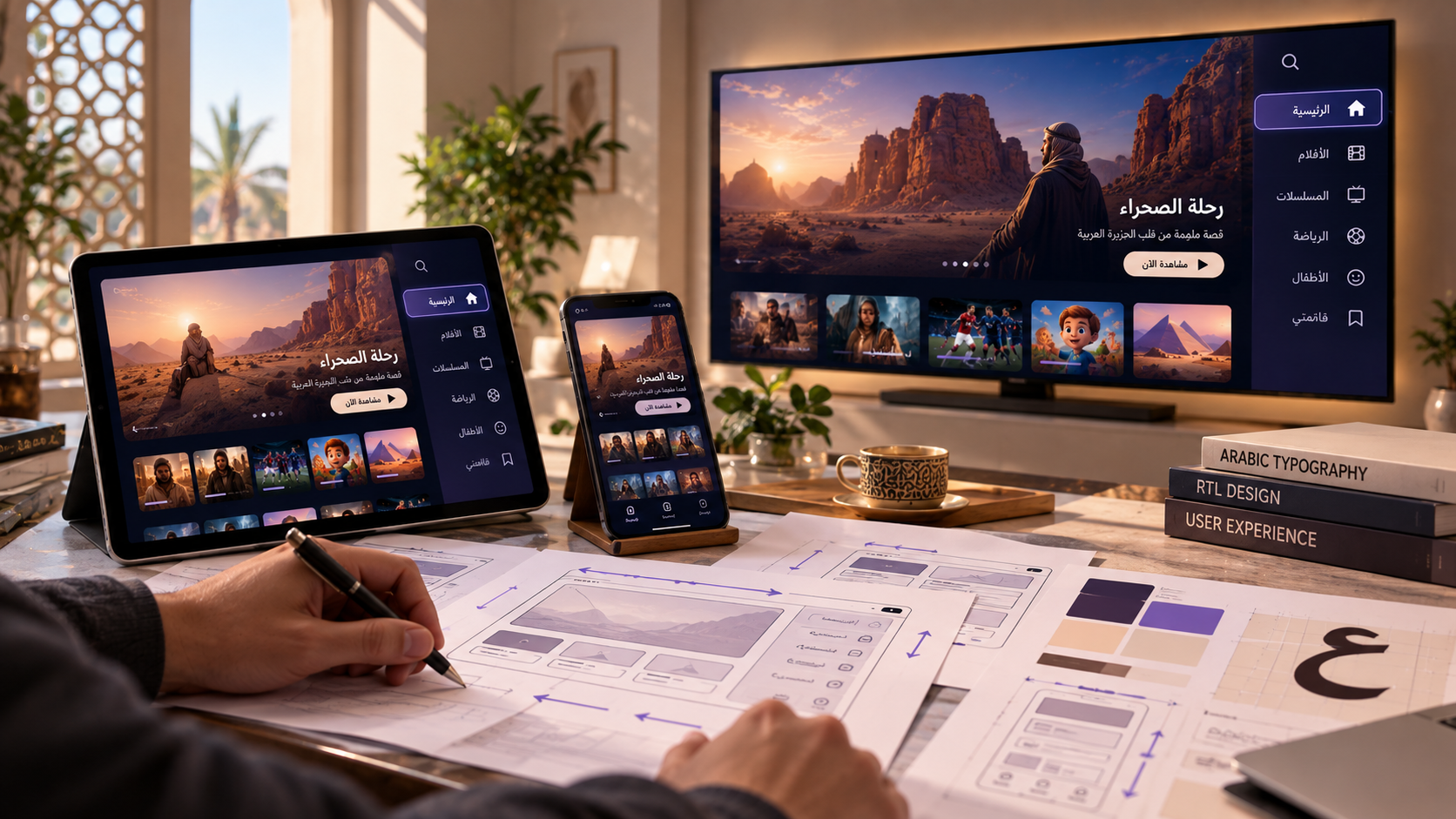
Arabic-First by Design: Why Localisation Starts Before Translation
Culturally meaningful digital products are built from the first design decision, not added as a finishing touch.
Translation is only one layer
A digital product can display Arabic words and still feel as though it was designed for someone else. Labels may be translated while navigation remains awkward, content hierarchy feels unfamiliar or the visual rhythm does not support right-to-left reading. These details shape the experience long before a person evaluates the words themselves.
Arabic-first design asks a more useful question: what changes when the language and its audiences are considered from the very beginning? The answer touches research, layout, typography, interaction, content strategy and product validation.
The standards explain the design challenge
The W3C's October 2025 Arabic and Persian Layout Requirements note says Arabic-script content is written right to left, while numbers and embedded left-to-right scripts need their own handling. The W3C's HTML guidance also covers how authors should mark up bidirectional content. A translated label cannot, by itself, solve the behaviour of an entire interface.
Start with structure
Right-to-left thinking affects more than the direction of a paragraph. Teams need to consider the reading order of information, the placement and behaviour of navigation, focus states, mixed-language content and the relationship between text and visual components. Television interfaces add their own demands, including viewing distance and directional remote-control navigation.
The goal is not to mirror every element mechanically. It is to create a coherent experience in which each choice has a purpose. This requires design and engineering to work together, particularly when shared components are used across TV, web and mobile.
Mixed-language content is not a corner case
Unicode's Bidirectional Algorithm addresses the display of lines containing both left-to-right and right-to-left characters. That matters in interfaces containing Arabic programme names alongside Latin brand names, dates, numbers or technical terms. The practical design lesson is to test realistic mixed-content screens instead of relying only on clean demonstration layouts.
Culture lives in the everyday details
Cultural relevance should not be reduced to decorative patterns or a generic image of the region. It appears in the stories people recognise, the words they use, the expectations they bring to a shared family screen and the way content is organised for discovery.
It also requires curiosity. Arabic-speaking audiences are diverse, and their preferences cannot be compressed into a single persona. Research and validation should leave room for different markets, generations and use cases. Authenticity is a discipline of listening, not a visual shortcut.
Accessibility belongs in the same conversation
WCAG 2.2 addresses accessibility across a range of devices and user needs. Its scope is web content, so it should not be misrepresented as a certification of an OORO television interface. Its principles nonetheless provide a useful reference when planning legibility, navigation and interaction in connected experiences.
Build with trust and inclusion in mind
Clear language, predictable navigation and accessible presentation help more people participate. Family-centred thinking adds the need for meaningful choice and responsible treatment of privacy and protection. These are ongoing product commitments rather than marketing decorations.
At OORO, Arabic at Heart, Family in Mind and Innovation for Everyone express how we intend to approach connected experiences. Together, they make localisation a strategic design principle, not a late-stage production task.
Make belonging a product quality
The most effective localised experiences rarely need to announce how local they are. People recognise the difference in how comfortably they can use them. When language, interaction and cultural understanding work together, technology becomes easier to approach—and more meaningful to keep using.
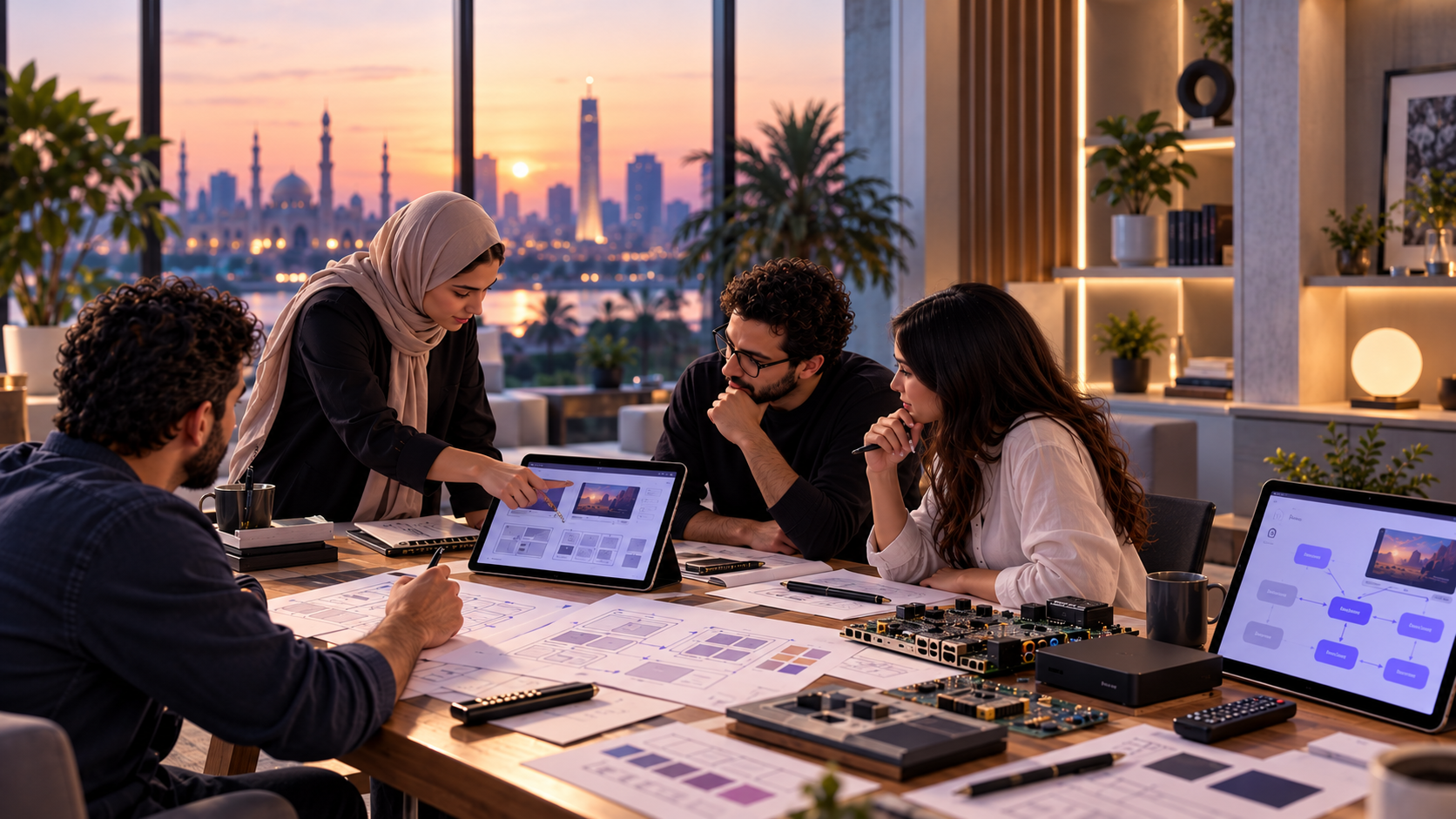
Beyond the Screen: Building a Connected Technology Ecosystem Together
The future of connected experiences depends on the relationships between manufacturers, content, design, engineering and people.
No connected experience exists in isolation
A television may be the most visible part of a connected product, but it relies on an entire network of decisions and collaborators. Hardware has to support the software. Software has to serve the experience. Content needs a useful route to discovery. Operations and support matter after the product reaches people.
That is why an ecosystem is more than a list of partners. It is a shared effort to make each part work better with the others. A meaningful partnership begins with a clear understanding of what each organisation contributes and what the end user should gain.
The regional opportunity has measurable scale
GSMA's Mobile Economy MENA 2025 states that mobile technologies contributed $350 billion to the region's economy in 2024, equivalent to 5.7% of regional GDP. It also reports 308 million mobile-internet users. These figures describe the wider mobile ecosystem, not OORO's market share or addressable revenue; they demonstrate why connected services have become an important regional economic conversation.
Different partners, complementary roles
Manufacturers think about product integration, quality, production and the long-term device journey. Content partners focus on the value of stories and how audiences discover them. Technology specialists bring expertise that helps platforms, applications and devices work together. Brands and commercial partners may explore relevant connected-TV opportunities within responsible experience design.
Each relationship needs its own goals, responsibilities and commercial structure. One-size-fits-all language can obscure those differences. Strong collaboration starts by defining the opportunity honestly, then designing a practical way to pursue it.
A shared platform does not remove the need to differentiate
RDK describes an open-source foundation that standardises core functions in video, broadband and IoT devices, while enabling customisation. Its public description explicitly refers to a community spanning operators, OEMs, chipmakers, system integrators and app developers. It is a concrete industry example of complementary roles working around common technology. It does not imply an OORO commercial affiliation or partnership.
Where OORO fits
OORO brings together two complementary pillars. OORO OS expresses our Arabic-first smart TV platform direction. OORO Technology Services brings digital experience, software engineering and hardware engineering into a coordinated capability for connected products.
The services catalogue spans experience design, TV and OTT software, embedded platforms, cloud and analytics, remote updates, testing, operations, application boards and manufacturing support. These capabilities create multiple starting points for collaboration, depending on what a partner is building. The specific delivery scope, ownership and commitments should always be agreed for each engagement.
Connectivity still has gaps
The ITU's 2025 Facts and Figures estimated six billion people online globally, while 2.2 billion remained offline. These are worldwide estimates, not MENA-only figures. They remind us that an ecosystem's success cannot be judged by technical sophistication alone: affordability, access and usability still matter.
Partnership is a design principle
Collaboration works best when it begins before the final handoff. Bringing relevant teams into the conversation early can reveal integration needs, align user journeys and make technical trade-offs easier to understand. It also creates room to explore what a partnership could become over time without overstating what is available today.
For OORO, collaborative growth is both a brand value and a practical way to approach innovation. Our ambition is to connect regional understanding with broad technological capability, creating experiences that are useful to people and commercially meaningful to those who build them.
The opportunity ahead
The next connected experience will not be defined by one organisation working alone. It will emerge from thoughtful combinations of creativity, technology, content and trust. The most exciting possibilities are the ones we can make real together.
References and further reading
[1] GSMA, The Mobile Economy MENA 2025. https://www.gsma.com/solutions-and-impact/connectivity-for-good/mobile-economy/mena/
[2] RDK Central, Official platform overview. https://rdkcentral.com/
[3] ITU, Facts and Figures 2025 press release, November 17 2025. https://www.itu.int/en/mediacentre/Pages/PR-2025-11-17-Facts-and-Figures.aspx