The Future of Smart TV Should Feel Like Home
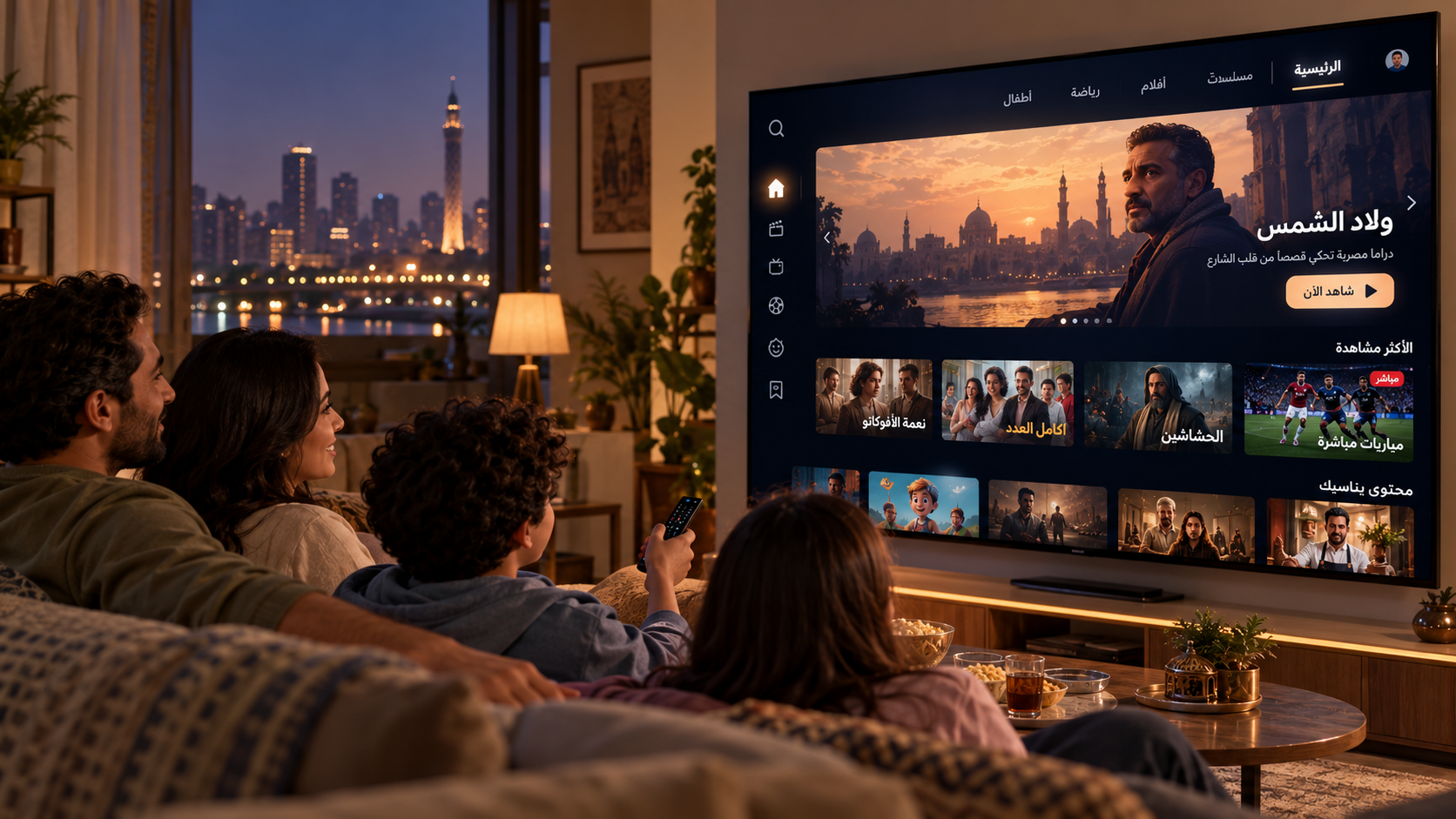
What changes when connected entertainment starts with the people, languages and cultures it is designed to serve?
The screen is global. The experience is personal.
A television can open a window onto the world in seconds. A story from another country, a live event, a familiar programme and a new discovery can all sit side by side. Yet the way people find, navigate and enjoy those experiences is deeply personal. It is shaped by language, routines, cultural context and the people sharing the room.
That is why the future of connected entertainment cannot be defined only by bigger catalogues or more sophisticated technology. It must also be defined by how naturally the experience fits into everyday life. An interface can be powerful and still feel distant. It can offer endless choice and still make discovery unnecessarily difficult.
The scale of the change
Nielsen's The Gauge reported that streaming represented 44.8% of all television use in the United States in May 2025, compared with 44.2% for broadcast and cable combined. It was the first month streaming exceeded those two categories together in that measurement. This is a US viewing measure, not a claim about Arab households. It does, however, illustrate why the television interface has become a critical place for navigating different types of entertainment. [1]
What Arabic-first really means
Arabic-first is not simply a translation applied after a product has been designed. It is a starting point. It means considering right-to-left navigation, content organisation, typography, the language of instructions and the way audiences recognise what matters to them from the beginning.
It also means resisting the idea that all households are the same. Families differ in age, taste and habits. A thoughtful platform creates room for those differences without losing its sense of clarity. Cultural relevance is strongest when it is expressed through useful details, not decoration.
A regional reason to design with care
In its 2025 regional report, GSMA estimated that 308 million people in the Middle East and North Africa used mobile internet in 2024. Digital experiences now cross devices and contexts, but connectivity alone does not guarantee relevance. The next question is how well products work for the people who use them. [2]
A family experience, not just an individual screen
Television remains one of the few digital experiences people regularly share. One person may be searching for a favourite show while another wants to explore something new. The remote passes from hand to hand. A great interface respects those small moments.
Designing with family in mind means valuing legibility, intuitive navigation, meaningful choice and confidence in the experience. It also means recognising that trust and privacy are foundational design responsibilities, not optional extras to add at the end.
Why Arabic cannot be an afterthought
The World Wide Web Consortium's Arabic and Persian Layout Requirements note, dated October 2025, documents right-to-left page structure and the special handling needed for mixed-direction text and numbers. These are structural considerations, not cosmetic ones.
From familiar to possible
At OORO, our Arabic-first perspective sits alongside a wider connected-technology ambition. OORO OS represents our platform direction for the television experience, while OORO Technology Services brings digital experience, software and hardware engineering together for connected products.
These are complementary expressions of one belief: innovation becomes more meaningful when it understands the people it serves. The opportunity is not to make technology feel smaller. It is to make its possibilities feel closer.